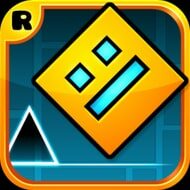
Geometry Dash delivers a fast-paced rhythm challenge where timing, focus, and repetition shape every attempt. Players guide a small icon through obstacle-filled stages that demand precision rather than luck. Each run becomes a learning experience, encouraging improvement through pattern recognition and reflex mastery while maintaining a satisfying sense of momentum and achievement.
Understanding the Core Flow
At its heart, Geometry Dash revolves around synchronization between movement and music. Every obstacle appears in predictable patterns, yet success depends on how well players react to visual and audio cues. The simplicity of one-touch controls hides surprising depth, making Geometry Dash approachable while still highly demanding.
Each level introduces mechanics gradually. Jump pads, portals, gravity shifts, and speed changes transform how movement feels. Because failure instantly restarts the attempt, players naturally memorize sequences. The design encourages persistence rather than frustration, turning repeated mistakes into progress.
- Jump timing becomes more important than speed.
- Music cues help predict upcoming hazards.
- Practice runs allow experimentation without pressure.
- Visual rhythm guides player reactions.
Level Variety and Player Creativity
One reason Geometry Dash stays engaging is the wide range of stage designs. Some focus on tight precision jumps, while others emphasize wave control or ship navigation. Players frequently revisit earlier challenges to refine performance and reduce mistakes.
Custom stages expand possibilities even further. Community creations introduce unusual patterns, puzzle-like sequences, and creative visual themes. Learning how different creators structure difficulty helps players adapt faster when facing unfamiliar layouts in Geometry Dash.
- Short reflex stages for quick sessions.
- Long endurance runs requiring concentration.
- Experimental layouts testing adaptability.
- Rhythm-focused challenges aligned closely with music.
Useful Tricks, Hacks, and Strategy Tips
Many newcomers search for shortcuts, but success in Geometry Dash usually comes from technique rather than exploits. Smart habits dramatically improve consistency without breaking intended mechanics.
- Tap lightly instead of holding input too long.
- Watch ahead rather than focusing on the icon.
- Divide levels mentally into smaller sections.
- Use practice checkpoints to isolate difficult parts.
Players often call these methods “hacks,” yet they simply optimize learning. Mastering rhythm awareness often matters more than reaction speed. Over time, muscle memory develops naturally, allowing smoother runs through demanding sequences in Geometry Dash.
Frequently Asked Questions
Why do levels feel easier after many attempts?
Repetition trains recognition. The brain begins predicting obstacles before they appear, which is central to mastering Geometry Dash.
Is memorization required?
Yes, but rhythm reduces reliance on pure memory. Music patterns guide movement once players understand timing.
How can players stay motivated?
- Celebrate small progress milestones.
- Switch between different difficulty levels.
- Replay completed stages for smoother runs.
- Focus on improvement instead of completion speed.
Ultimately, Geometry Dash rewards patience and precision. Every successful attempt reflects learned skill, making each victory feel earned rather than accidental.